


How to Close Woven Polypropylene Bags: Thread, Setup and Checks
Woven sack packing guide
A clean close starts before the first stitch.
Closing woven polypropylene bags consistently means matching the sack, thread and machine to the product you pack. For Australian agricultural, warehouse and industrial packing teams, this guide explains what to check before buying consumables or changing a closing setup.
Compare the thread options
01 / Bag mouth
Leave room to close.
Check the actual filled sack. The bag mouth needs sufficient unfilled material for the chosen closure and equipment, including any liner or folded layers.
02 / Thread and holder
Match both specifications.
Confirm the approved thread specification and the cone or spool format. A bigger cone is not automatically a suitable replacement for a machine-mounted spool.
03 / Finished pack
Inspect the whole seam.
Agree how the closure will be checked, then trial it through the intended handling route. A tidy stitch is one check, not proof of every packaging requirement.
Start with the sack
Check the mouth after a representative fill.
A sack can hold the product and still leave too little material for a workable closure. Include the closing method when selecting the bag, rather than treating it as a final step after the size is chosen.
Record the material being packed, intended fill quantity, bag construction and how the finished pack will be moved. Use the product you actually handle in the trial. A bulky, irregular fill will present differently from a compact, free-flowing one, even when the same sack is used.
Headspace is the unfilled area above the contents. Establish enough for the bag mouth to be brought together and presented to the closer in the way its instructions require. Check this with the contents settled as they would be during normal packing. Avoid choosing an arbitrary allowance that ignores the bag, fill and closing equipment.
For a gusseted sack, inspect the side folds as well as the front and back faces. Confirm that all intended layers are aligned at the mouth. If a liner is required, agree how it is closed and how it sits within the outer sack. The liner and the woven outer may need separate attention.

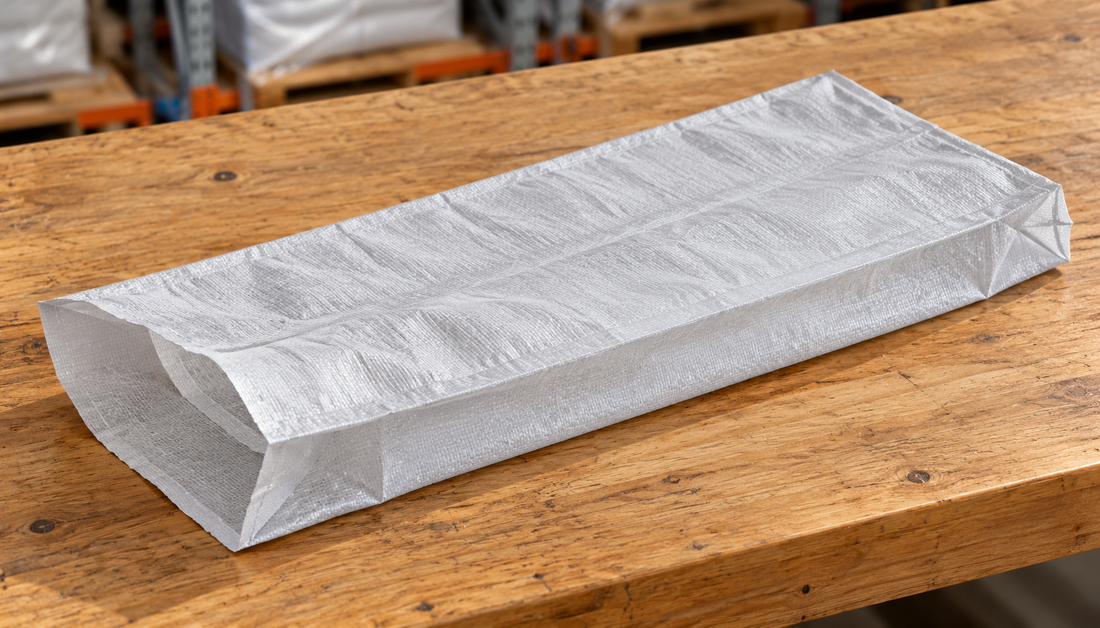
Sack example / GB1
Woven Polypropylene Gusseted Bag
(43 CM + 13 CM) x 96 CM
Plain, unprinted woven polypropylene with a gusseted profile.
Use this as a dimensional starting point for a packing trial. Confirm the fill, available bag-mouth material and closing setup before choosing an order quantity.
50-bag pack: GB1-50
100-bag pack: GB1-100
500-bag pack: GB1-500
1000-bag pack: GB1-1000
Read the thread specification
Thread count, cone weight and length are separate facts.
The description “bag closing thread” identifies a use, but it does not make every product interchangeable. Compare the complete stated specification with your machine documentation and approved packing process.
Scroll the comparison sideways to see all four columns.
| Product and SKU | Listed specification | Cone or spool | Purchasing check |
|---|---|---|---|
|
Pacific Bags Australia Sewing Thread PBA-ST-1 / PBA-ST-10 |
12s/4, 4-Ply High-Tenacity Polyester Silicone Wax Coated |
200 g Cone White |
Confirm the specified thread, treatment and cone fit for the closer. Choose the single-cone or 10-cone order unit deliberately. |
|
Sewing Thread for Portable Bag Closer ST-1 / ST-10 |
4/8 Polyester 1350 metres |
200 grams White |
Keep the listing's 4/8 designation intact. Ask for confirmation rather than treating it as another thread count by appearance. |
|
TYMATE Bag Closing Thread PBA-ST3 |
20/1 x 8 100% polyester |
3 kg net thread weight Natural 1 cone per order unit |
Confirm thread acceptance and holder or external stand capacity. Compatibility with individual machine models has not been confirmed. |
A heavier cone does not establish a longer run.
Thread weight describes the supplied mass. Length describes the amount of thread in metres. Only the ST example above has a stated length in this comparison, so do not calculate metres for the other cones from their weight.
Likewise, do not turn cone mass into a guaranteed number of bags. Consumption depends on the closure width, stitch arrangement, thread tails and work rejected or repeated. Record actual use in your own process when planning replenishment.
Check how the thread is supplied to the machine.
Compare the physical holder requirements with the supplied cone. A 3 kg format may require a different arrangement from a small spool, and the TYMATE listing specifically requires this check. Obtain confirmation before ordering it as a replacement.
Keep unused thread clean and dry. Retain the product label and SKU with your purchasing record so the next order repeats the approved specification instead of relying on colour or a photograph.
Do not assume food-contact suitability. Where hygiene, food or feed requirements apply, ask for documentation covering the actual bag, liner, thread and intended use. A polyester material description or a treatment description alone does not establish that approval.
Match the equipment
Use the instructions for the machine you own.
A portable bag closer stitches the bag mouth using a needle and thread. The required thread, needle, threading route and operating procedure belong to the specific machine. Confirm those details for the supplied model before combining equipment and consumables.
Manufacturer NEWLONG lists portable machines with single-thread and double-thread chain stitches. That difference is a useful reason to check the exact model rather than assuming every portable closer uses the same setup.
For the L1-C example, the current listing identifies a single-thread Federal chain stitch, woven polypropylene among the supported bag materials and a 6.1 kg machine weight. Confirm its approved thread and holder arrangement for your application. The thread comparison above is a purchasing reference, not a tested compatibility chart.

Equipment example
L1-C Portable Bag Closer Sewing Machine
For stitching supported woven and paper bags. Review the complete product specification and confirm the setup for your bag construction.
SKU: PBC-L1-C
View the L1-C bag closerStitching and barrier sealing need separate checks.
A sewn closure does not, by itself, establish an airtight, waterproof or sift-resistant pack. Fischbein's consumables information describes machine-specific thread, needles and crepe tape. This reinforces the need to assess the complete closing system. It does not establish compatibility with the products shown here.
Discuss your material and protection requirements with the supplier. If a liner or heat-sealing process is proposed, confirm the actual material layers and the appropriate equipment before changing the closure.
Build a repeatable packing method
Trial the combination before a volume order.
Use a short written trial record covering the bag, product, closer and consumable. Agree who can approve the finished pack and what will cause it to be rejected. Follow the machine manual and your site's procedures throughout.
-
Record the starting combination.
Note the bag SKU, dimensions, liner if any, product being packed and intended fill quantity. Record the machine model, approved needle, thread specification and holder arrangement. Keep the labels or supplier documents with the record.
-
Prepare the bag mouth.
Confirm the unfilled allowance using a representative pack. Check that the mouth can be aligned with its gussets and any liner in the intended position. Keep loose product out of the closing area according to the packing procedure.
-
Confirm the machine setup.
Use the correct manual for threading, lubrication, guards, feed and thread finishing. Arrange training or supplier assistance where required. Isolate power as directed before adjustments, cleaning or needle changes, and keep hands clear of moving parts.
-
Inspect the closure before release.
Look across the full seam for missed layers, skipped stitches, damaged fabric, broken thread and loose ends. Check the start and finish against the machine's instructions. Set aside affected packs for assessment instead of sending them onward.
-
Follow the intended handling route.
Assess representative packs through the normal packing, stacking and movement process under your approved procedures. Check for seam opening, product escape or bag damage. Do not lift a sack by its thread closure or treat stitching as a lifting point.
-
Keep the approved result.
Record the accepted method, inspection criteria and person responsible. Photograph an acceptable closure and retain a sample where practical. Recheck the process when the bag, thread, machine, fill or handling conditions change.
For an example of model-specific instructions, NEWLONG's NP-7A manual covers preparation, operation, adjustment and maintenance. Its settings and parts apply to that model. Obtain the correct instructions for your own closer.
When the result changes
Record the defect before changing the setup.
A seam fault is a reason to review the combination, not a reason to assume that heavier thread or more tension will solve it. Keep an affected bag and note when the problem appears, such as after a thread change, at a gusset or during subsequent handling.
Use the manual's troubleshooting procedure and involve the equipment supplier when the cause is unclear. Adjustments should be made by an authorised person with the machine isolated as required. Avoid repeatedly stitching a damaged area without assessing the bag.
Skipped stitches or broken thread
Record the thread SKU, machine settings, needle condition and the point where the fault occurs. Have the threading, approved consumables and machine condition checked before resuming the run.
The seam misses part of the mouth
Review the fill level, mouth alignment, gusset position and presentation to the closer. Check whether the same issue occurs on empty trial bags and representative filled packs.
Fine product escapes after closing
Record whether leakage appears at the seam, fabric or liner. Ask for a review of the complete packaging system. A different thread alone may not address the path through which material is escaping.
Make the enquiry useful
Send the bag and machine details together.
A clear enquiry gives the supplier a practical basis for checking the range. Include a photograph of the sack mouth and the current thread label, plus a description of the result you need or the problem you are seeing.
Plan purchasing around the approved SKU and order unit. Keep the number of bags in a pack separate from the number of cones supplied. Use trial consumption to plan thread replenishment, allowing for your own recorded rework and changeover use.
For the wider bag specification, our feed bag selection guide explains construction choices for grain, pellets and stockfeed. Confirm suitability for the specific product and requirements.
Include these details.
- Bag SKU, dimensions, construction and any liner.
- Material being packed and intended fill quantity.
- Closer make, model and current approved setup.
- Thread specification, cone format and holder details.
- Required protection, handling route and inspection criteria.
- Typical usage, proposed order quantity and delivery postcode.
Specifications in this guide were checked against current product listings on 27 October 2026. Reconfirm product details and equipment suitability before ordering.
Before you order
Bag closing questions.
Can I use any polyester thread in a portable bag closer?
Confirm the complete specification, treatment and supply format against the machine's requirements. The polyester description alone does not establish thread compatibility. Keep the stated count designations intact when comparing products.
Can a 3 kg cone replace a 200 g spool?
Only after confirming both the thread specification and the holder or external stand arrangement. The TYMATE 3 kg cone is not listed as a confirmed direct replacement for individual portable machine models.
How much space should I leave above the contents?
Establish the allowance with the actual sack, fill and closure method. There is no universal measurement given here. Check the mouth presentation and all layers in a representative trial, using the machine and packaging suppliers' guidance.
Does sewing make a woven sack waterproof?
A stitched mouth does not establish a waterproof pack. Bag construction, any liner, closure and storage exposure all need to suit the requirement. Ask for a complete packaging recommendation where moisture or fine-product containment matters.
How many bags will one cone close?
Use recorded consumption from your own approved process. Closure width, stitch arrangement, thread finishing and rework affect use. Cone weight alone does not give a guaranteed bag count, and a stated thread length is not a guaranteed finished-pack yield.
Choose the complete combination
Match the sack. Confirm the thread. Trial the close.
Review the bag accessories range, then bring your bag specification and machine details into the purchasing discussion. A recorded trial gives the next order a clear starting point.
Still choosing the bag?
Browse our woven sacks range and compare dimensions, construction and the way you intend to fill and close the pack. Include those details when contacting Pacific Packaging Australia.